Stains and Processing

Home / Ophthalmic Pathology / Stains

Tissue Processing

  • Fixation in most cases is 10% neutral buffered formalin
  • For electron microscopy, fix tissue in glutaraldehyde
  • Fix in ethyl alcohol for cytologic preparations
  • For immunofluorescence, fix with Michel medium
  • Frozen sections and special stains (Oil Red O) require fresh tissue
    • Can keep tissue fresh for 24 hours if pack with ice
    • Place fresh tissue on saline-soaked gauze, not in dry gauze or container of saline
  • Embedding process removes water and replaces with paraffin
    • Dissolves IOLs made of PMMA (polymethylmethacrylate), silicone, and haptics made of polypropylene
    • Does not dissolve sutures
    • Overnight process
  • 4-6 μm sections of paraffin-embedded tissue are cut, affixed to a glass slide, and stained with various tissue dyes

Hematoxylin and Eosin (H&E)

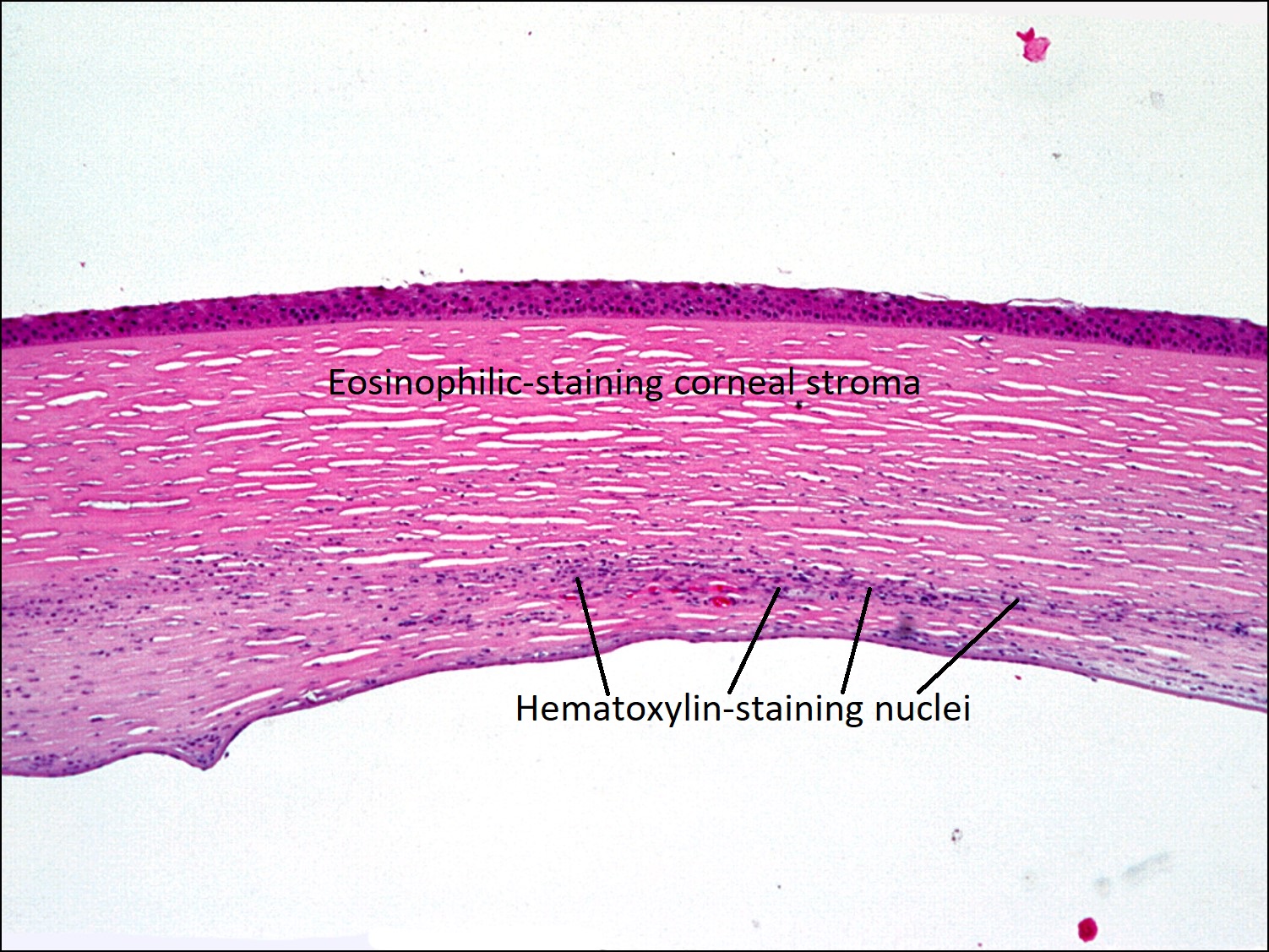
Mamalis Stains 01 unlabeled  Mamalis Stains 01 labeled

H&E stain of cornea

  • Used in routine histopathologic staining
  • Blue: hematoxylin stains nucleus blue
  • Red: eosin stains cytoplasm red/pink
  • Does not stain lipidor mucin

Periodic Acid-Schiff (PAS)

Mamalis Stains 02 unlabeled  Mamalis Stains 02 labeled

PAS stain of corneal epithelium, Bowman’s membrane, and stroma

  • Used to stain basement membranes (Descemet’s membrane, lens capsule, epithelial basement membrane)
  • Magenta: glycogen and proteoglycans

Alcian Blue

Mamalis Stains 03 unlabeled  Mamalis Stains 03 labeled

Alcian Blue stain in Macular corneal stromal dystrophy

  • Used to stain mucopolysaccharides
    • Useful in recognizing Macular corneal stromal dystrophy and cavernous optic atrophy of Schnabel
  • Blue: acid mucopolysaccharide

Colloidal Iron

  • Stain for mucopolysaccharides
    • Helps with recognition of Macular corneal stromal dystrophy and cavernous optic atrophy of Schnabel
  • Blue: acid mucopolysaccharides
  • Red/purple: collagen

Alizarin Red

Mamalis Stains 04 unlabeled  Mamalis Stains 04 labeled

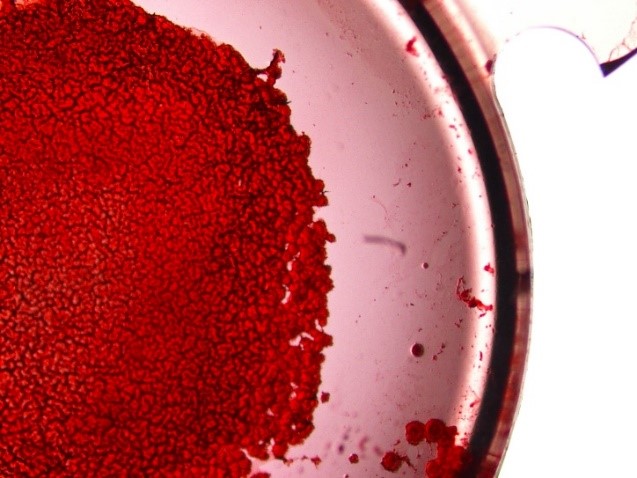
Calcification on explanted IOL

  • Used in band keratopathy and IOL calcification
  • Red: calcium

Von Kossa

  • Used to identify calcium, so useful in band keratopathy and IOL calcification
  • Less specific for calcium than Alizarin Red
  • Black: calcium phosphate salts

Congo Red

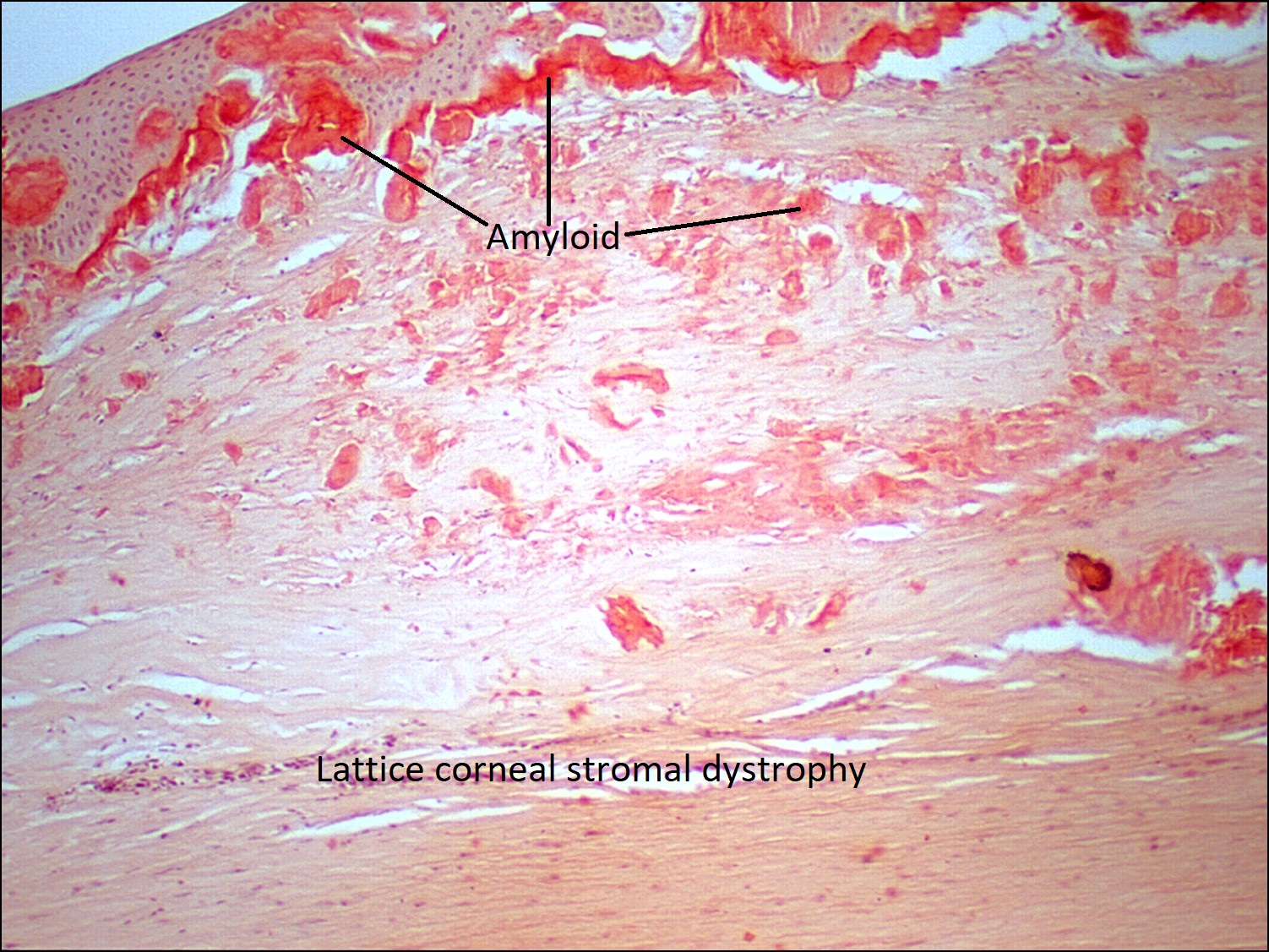
Mamalis Stains 05 unlabeled  Mamalis Stains 05 labeled

Congo red stain in Lattice corneal stromal dystrophy

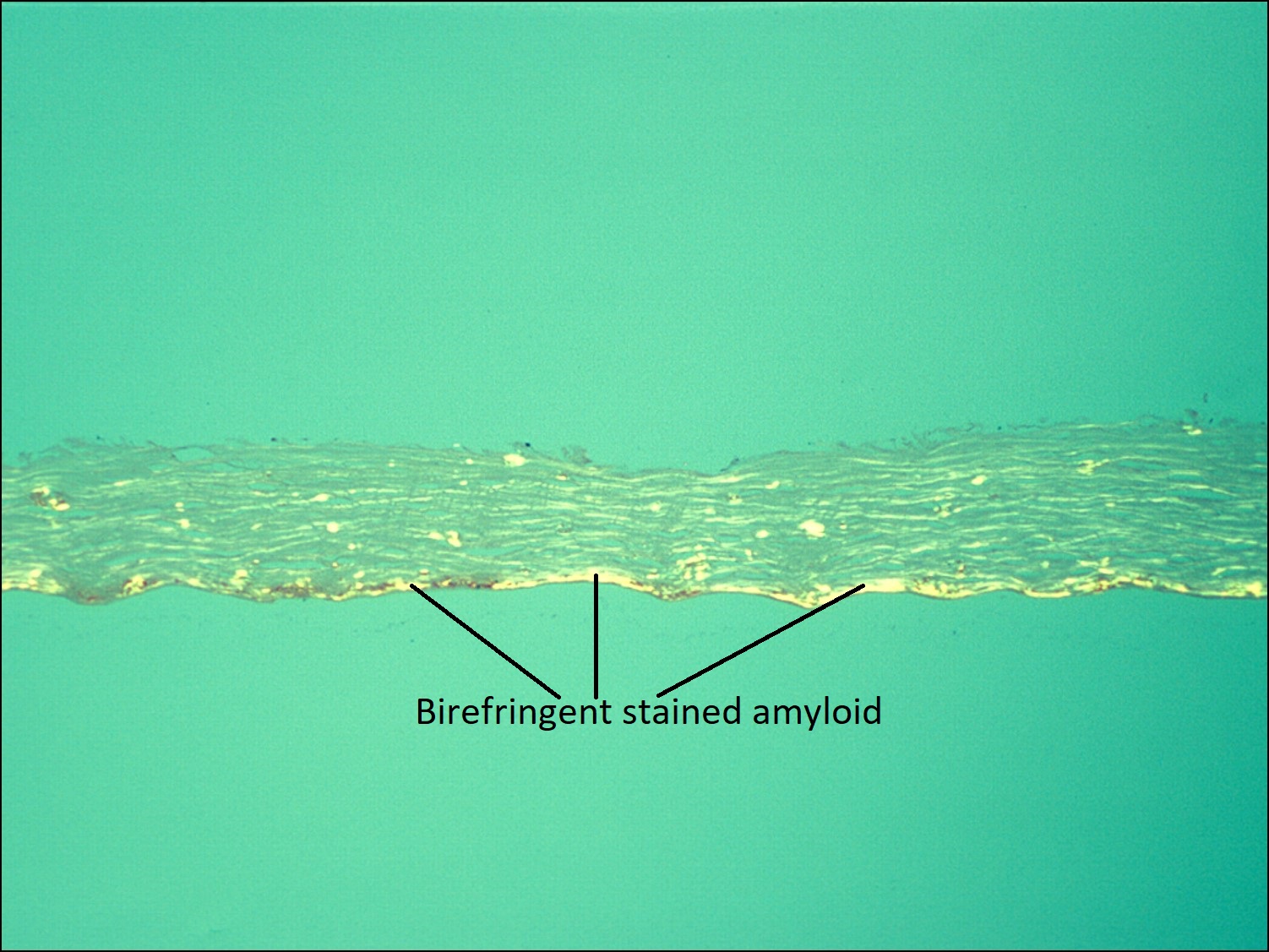
Mamalis Stains 06 unlabeled  Mamalis Stains 06 labeled

Apple-green birefringence of corneal tissue

  • Used to stain amyloid
    • Diagnoses amyloid deposits in all ocular tissues
    • Also useful in Lattice corneal stromal dystrophy
  • Orange: amyloid
  • Shows apple-green birefringence under polarized light

Crystal Violet

  • Less commonly used to stain amyloid and used to recognize Lattice corneal stromal dystrophy
  • Purple/violet: amyloid

Thioflavin T

  • Stains for amyloid and used to recognize Lattice corneal stromal dystrophy in immunocytochemistry
  • Fluorescent yellow: amyloid

Masson’s Trichrome

Mamalis Stains 07 unlabeled  Mamalis Stains 07 labeled

Masson’s Trichrome stain in Granular corneal stromal dystrophy

  • Tri-color stain used to distinguish cells from connective tissue
    • Also used to diagnose Granular corneal stromal dystrophy
  • Blue: collagen
  • Dark red/purple: nuclei
  • Red: muscle and cytoplasm

Gram Stain


Mamalis Stains 08 unlabeled  Mamalis Stains 08 labeled

Gram stain showing gram-positive bacteria

  • Used if question of bacterial infection
  • Specifically stains the thick peptidoglycan cell walls of certain types of bacteria
  • Blue: Gram-positive bacteria
  • Red: Gram-negative bacteria
  • Yellow: corneal stroma

Ziehl-Neelsen

  • Used to identify atypical mycobacteria
  • AKA Acid-fast stain
  • Red: acid-fast organisms

Gomori Methenamine Silver (GMS)

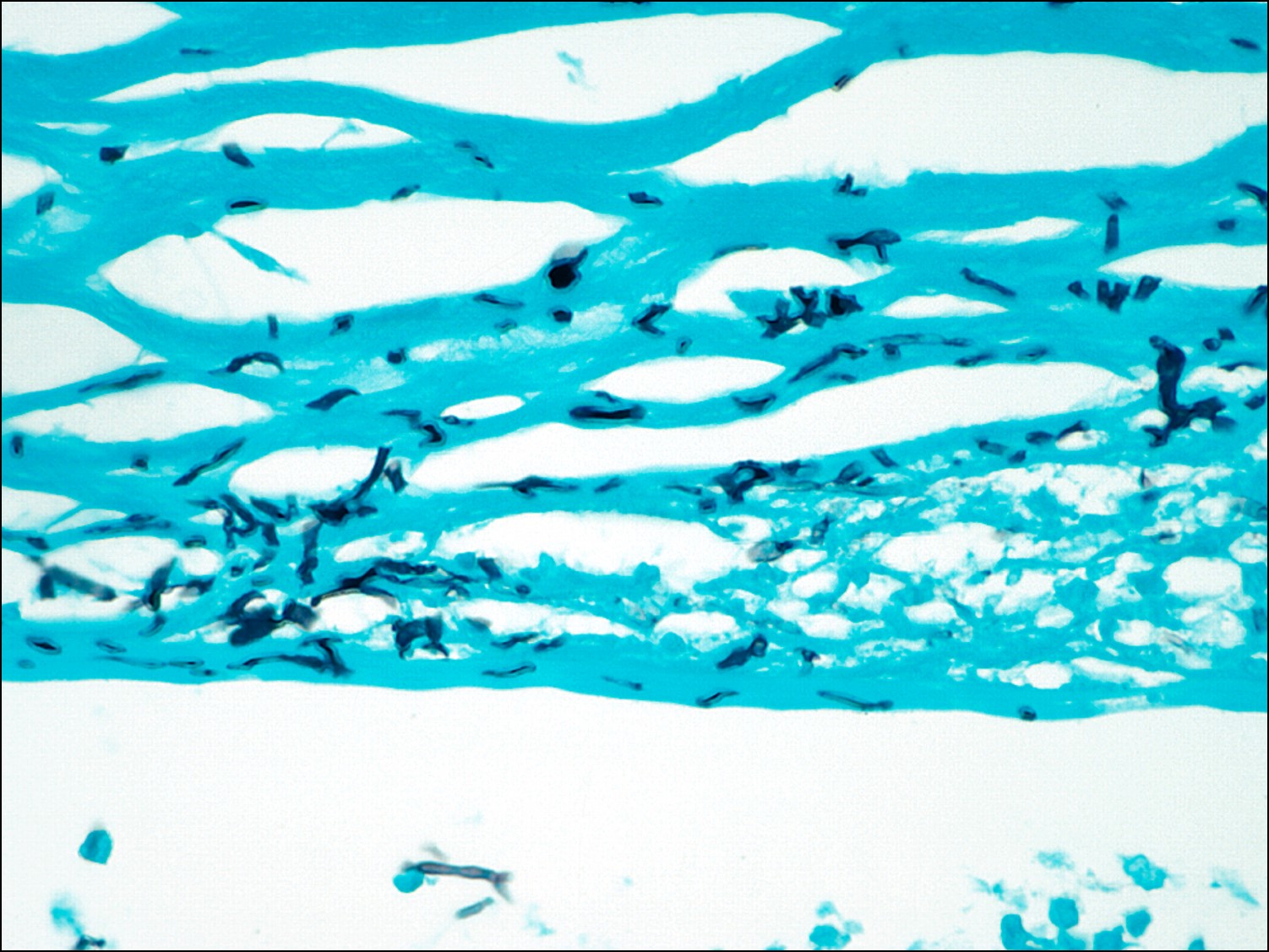
Mamalis Stains 09 unlabeled  Mamalis Stains 09 labeled

GMS stain showing yeast

  • Primarily used to identify fungal elements
  • Black: fungal elements
  • Green/blue: background

Gridley

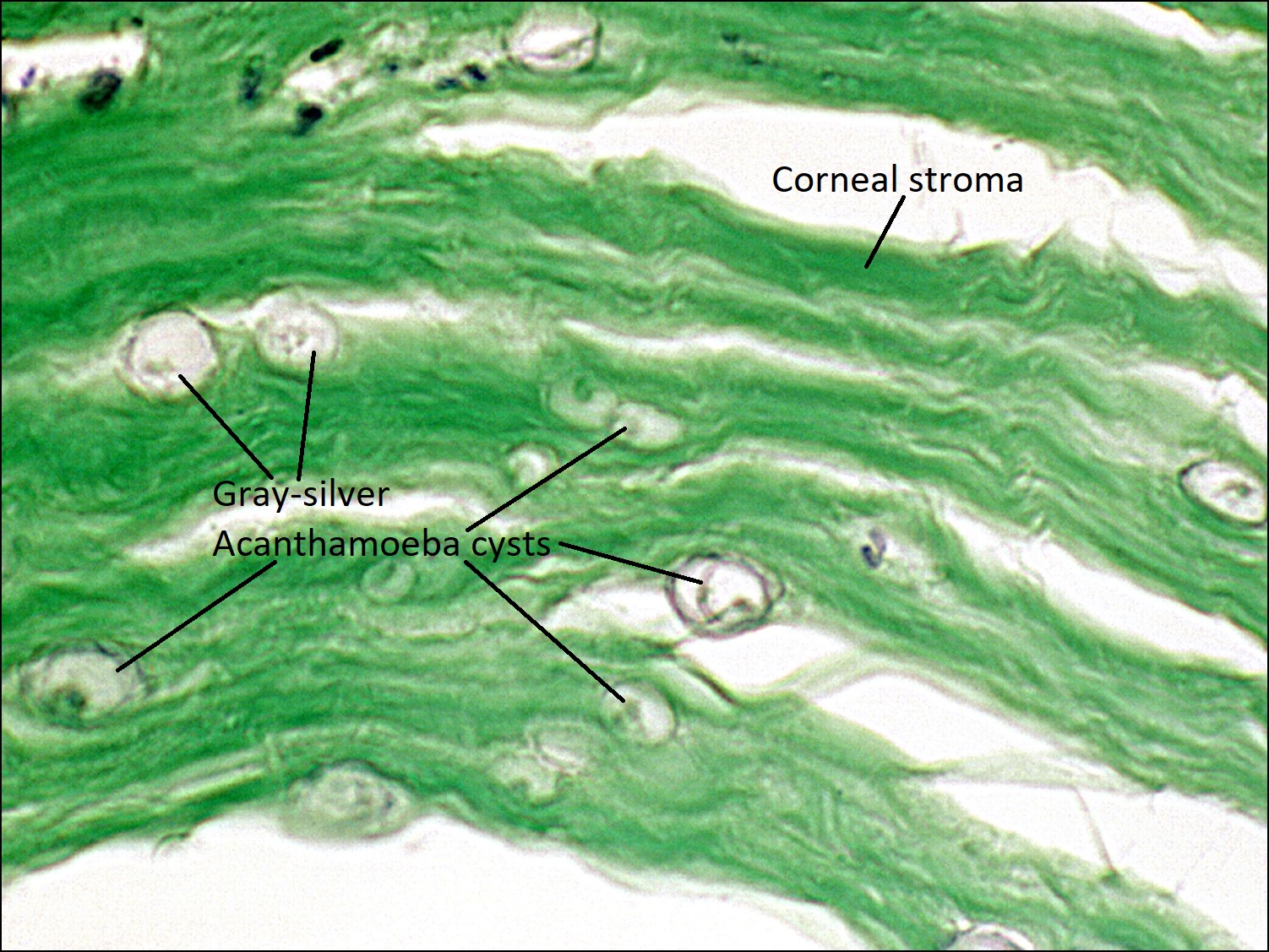
Mamalis Stains 10 unlabeled  Mamalis Stains 10 labeled

Gridley stain showing Acanthamoeba cysts in the cornea

  • Primarily used in the diagnosis of acanthamoeba
  • Gray/silver: acanthamoeba cysts
  • Green: background/stroma

Prussian Blue

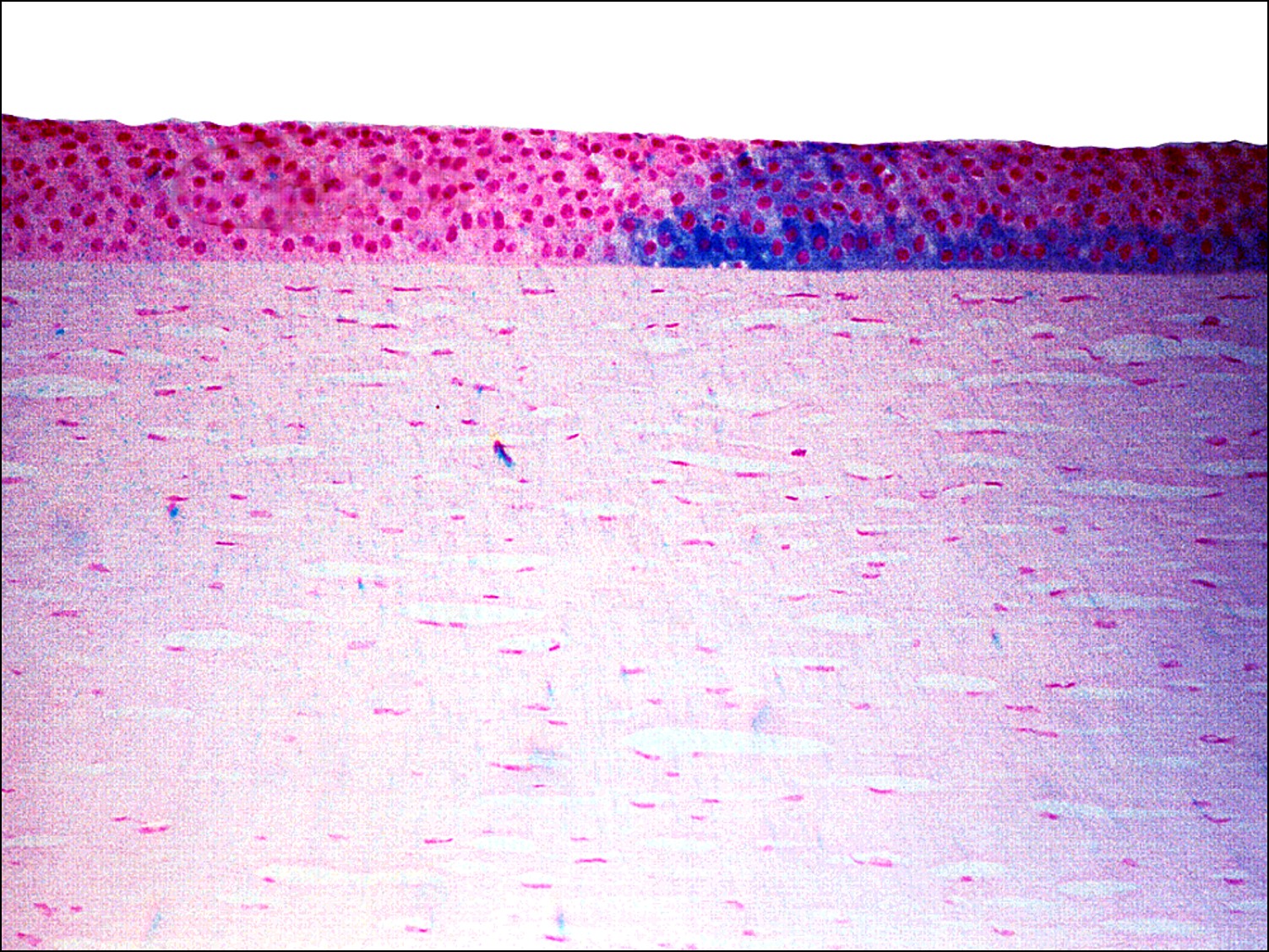
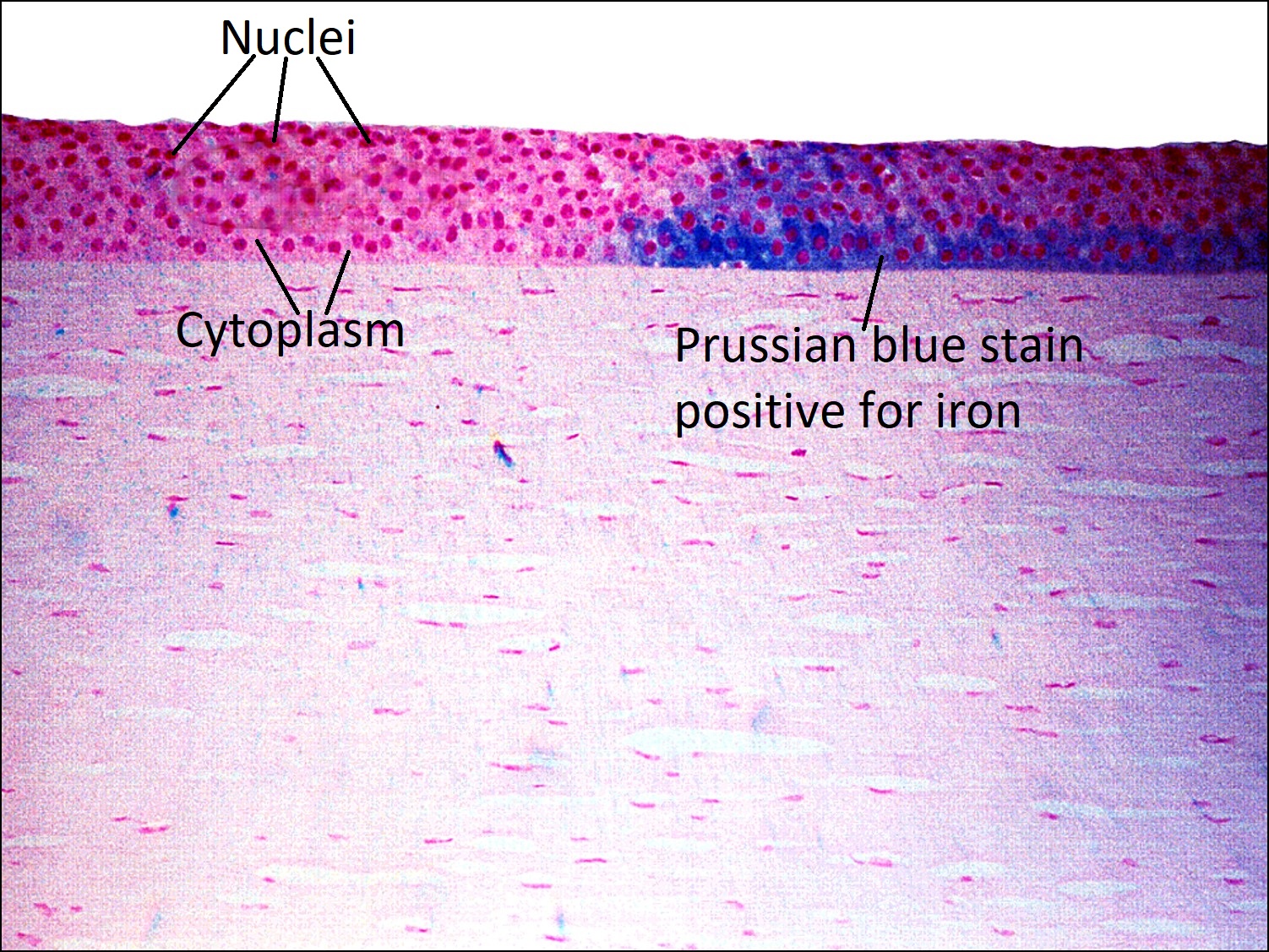
Mamalis Stains 11 unlabeled   Mamalis Stains 11 labeled

Prussian blue stain of cornea

  • Used to stain for iron in tissue, such as in hemosiderosis bulbio
  • Iron lines are left wherever tears pool and at elevations (keratoconus, pterygium)
  • Blue: iron

Verhoeff-van Gieson

  • Stains for elastin, which can be helpful in identifying the elastic layer of temporal artery
  • Black: elastic fibers

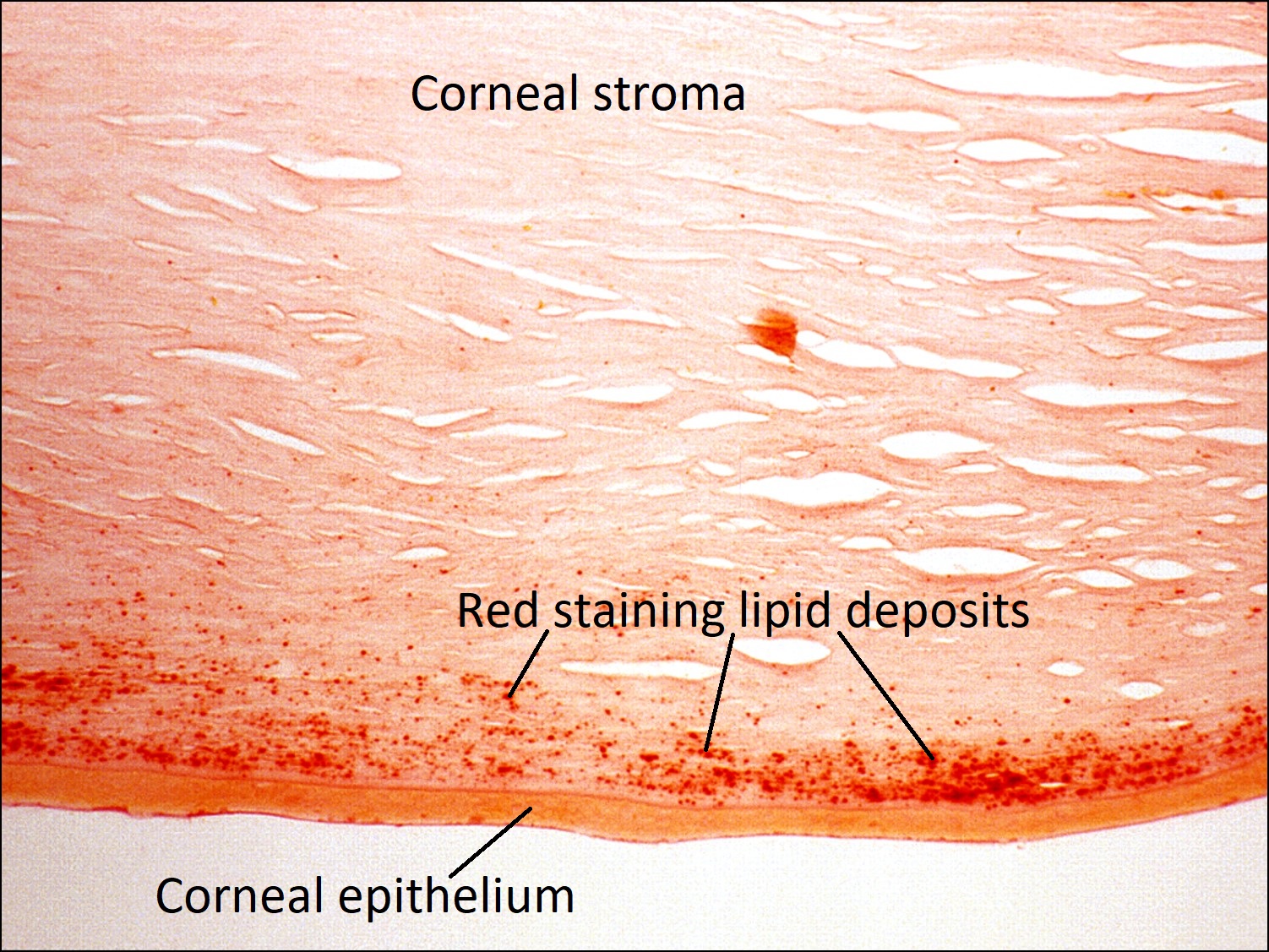
Oil Red O

Mamalis Stains 12 unlabeled  Mamalis Stains 12 labeled

Oil Red O stain showing arcus senilis of the cornea

  • Stains for lipid in frozen sections of fresh tissue
    • Helps diagnose sebaceous carcinoma versus other epithelial-derived malignancies
  • Red: lipid

Sudan Black

  • Also stains for lipid in frozen sections of fresh tissue
    • Helps diagnose sebaceous carcinoma versus other epithelial-derived malignancies
  • Used less often than Oil Red O
  • Black: lipid

Immunohistochemistry (IHC)

Mamalis Stains 13 unlabeled  Mamalis Stains 13 labeled

S-100 immunohistochemistry stain identifying melanocytes

  • How IHC works
    • Cells present specific antigens
    • Primary antibody binds cell antigen
    • Secondary antibody binds to primary antibody
    • Chromophore on secondary antibody gives color signal seen on microscopy
  • Common antigens and cell types in IHC
    • Cytokeratins: cells of epithelial origin (adenoma, carcinoma)
    • Desmin, myoglobin, actin: smooth and skeletal muscle (leiomyoma, rhabdomyosarcoma)
    • S-100: neuroectoderm (schwannoma, neurofibroma, melanoma)
    • HMB-45, Melan A: melanocytes (nevus, melanoma)
    • Chromogranin, synaptophysin: neuroendocrine cells (metastatic carcinoid, small cell carcinoma)
    • Leukocyte common antigen (CD45): hematopoietic cells (leukemia, lymphoma)
    • CD antigens: white blood cell subtypes
    • Her2/Neu, c-Kit: metastatic breast carcinoma prognosis and treatment

Electron Microscopy

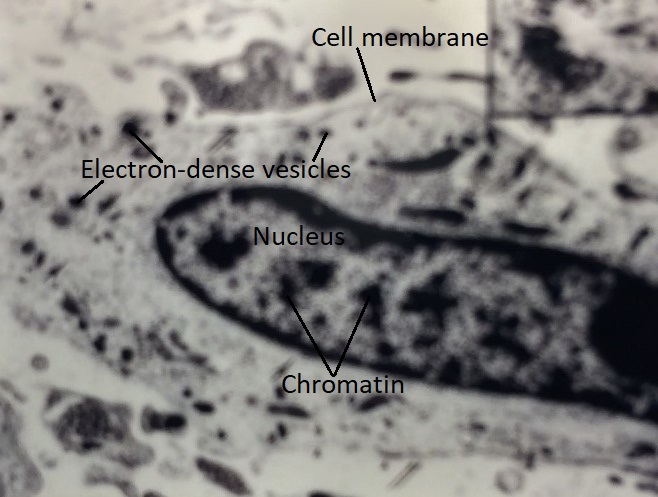
Mamalis Stains 14 unlabeled  Mamalis Stains 14 labeled

TEM of Iris Pigment Epithelium Leiomyoma

  • Uses an electron beam rather than a beam of light (photons)
  • Electrons have a smaller wavelength, so can achieve a higher resolution
  • Specimen must be dehydrated and embedded in resin
  • Fix tissue with glutaraldehyde instead of formalin
  • Stain with heavy metal (lead, uranium, tungsten) to scatter electrons and create contrast in different structures
  • Needs high-vacuum environment to allow electron beam to be straight
  • Generates black-and-white images
    • Black: electron dense
  • Transmission electron microscopy (TEM)
    • Creates cross-section image of specimen
    • Requires very thin sections that are 100 nm thick
  • Scanning electron microscopy (SEM)
    • Creates image of the specimen’s surface
    • Electrons do not pass through specimen, so thin sections not needed
    • Lower voltage electron beam than TEM
    • Can use low-vacuum environment
    • Coat with gold to prevent charging the specimen from the electron beam and increase the signal-to-noise ratio
  • Lengthy specimen preparation and very expensive equipment, therefore very rarely used in ocular pathology

Summary of Common Stains in Ocular Pathology

 
Stains Colors Examples
H&E Blue: nucleus

Red/pink: cytoplasm

Routine tissue stain
PAS Magenta: basement membrane glycogen and proteoglycans Descemet membrane
Alcian Blue Blue: acid mucopolysaccharides Macular corneal stromal dystrophy
Colloidal Iron Blue: acid mucopolysaccharides

Red/purple: collagen

Macular corneal stromal dystrophy
Alizarin Red Red: calcium Band keratopathy
Von Kossa Black: calcium phosphate Band keratopathy
Congo Red Orange with red-green birefringence: amyloid Lattice corneal stromal dystrophy
Crystal Violet Purple/violet: amyloid Lattice corneal stromal dystrophy
Thioflavin T Fluorescent yellow: amyloid Lattice corneal stromal dystrophy
Masson’s Trichrome Blue: collagen

Dark red/purple: nuclei

Red: cytoplasm, muscle

Granular corneal stromal dystrophy
Gram Stain Blue: Gram-positive bacteria

Red: Gram-negative bacteria

Yellow: corneal stroma

Bacterial infections
Ziehl-Neelsen Red: acid-fast organisms

Blue: background

Tuberculosis
GMS Black: fungal elements

Blue-green: background

Fungal infections
Gridley Gray-silver: acanthamoeba cysts

Green: background

Acanthamoeba infections
Prussian Blue Blue: iron Hemosiderosis bulbi
Verhoeff-van Gieson Black: elastic fibers Temporal artery biopsy
Oil Red-O Red: lipid Sebaceous carcinoma
Sudan Black Black: lipid Sebaceous carcinoma

References

Harper RA. Basic Ophthalmology. Amer Academy of Ophthalmology; 2010.

Yanoff M, Fine BS. Ocular Pathology, A Text and Atlas. Lippincott Williams & Wilkins; 1989.