


Proparacaine
Home / Basic Ophthalmology Review / Diagnostic Use of Eye Drops
Topic: Proparacaine
Name and Title: Brian Walker, 4th year Medical Student, McGovern Medical School at UTHealth
Location: (Medical Student Education Outline > I. Introduction to the Eye Exam > Diagnostic use of Eye Drops > Proparacaine)
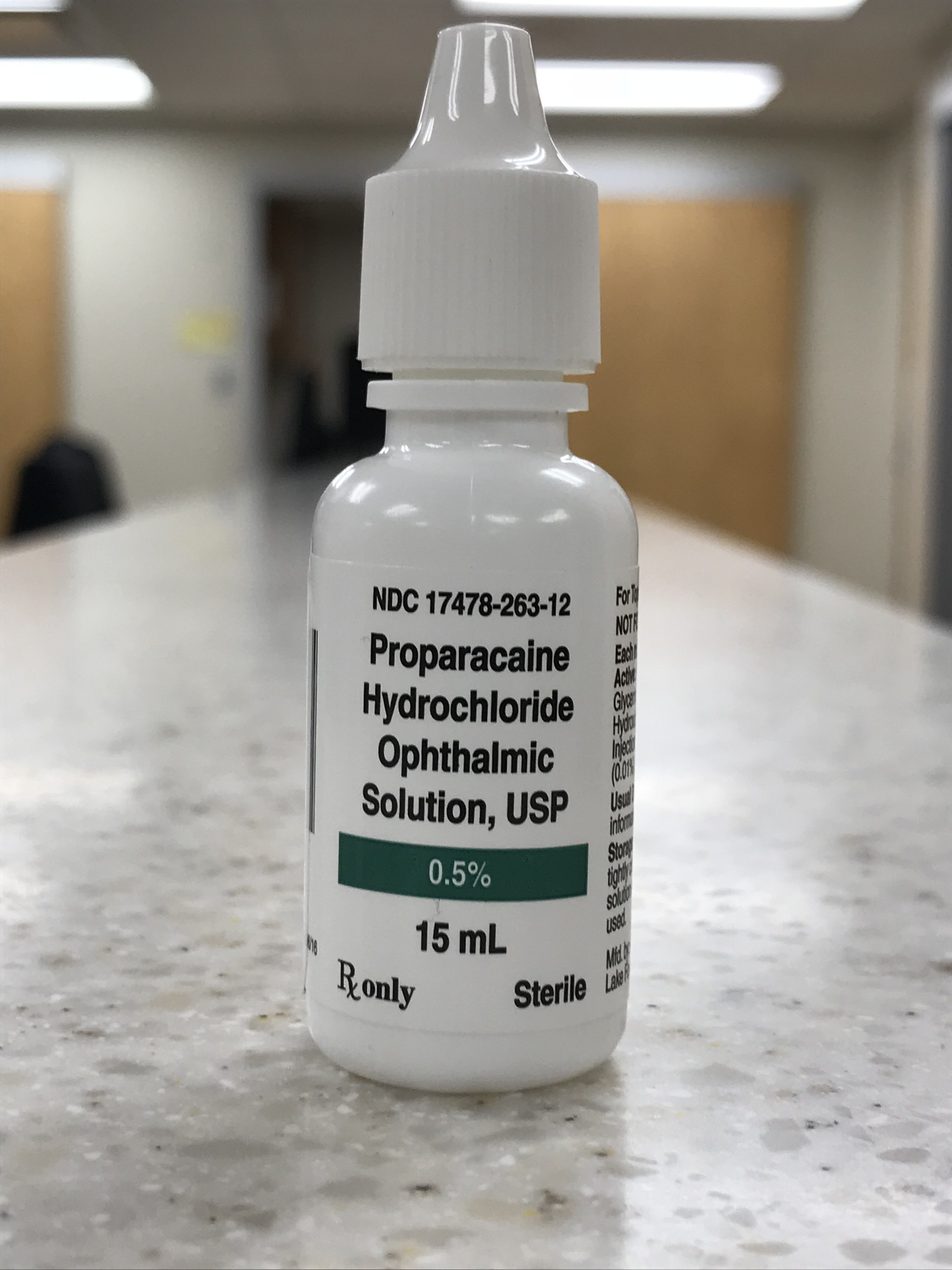
Proparacaine (Alcaine, Parcaine) is a topical ophthalmic anesthetic. This eye-drop provides 10-20 minutes of eye surface anesthesia or numbing for diagnostic and operative procedures but NEVER as a therapeutic treatment for eye pain, as repeated use can be severely toxic to the eye.
- Uses:
- Diagnostic:
- In cases of eye pain of unknown origin, proparacaine can be used to rule out surface causes of pain (i.e. corneal or epithelial abrasion). The pain almost immediately dissipates with one drop of proparacaine.
- When combined with fluorescein, proparacaine provides numbing of a corneal abrasion while fluorescein stains the denuded epithelium.
- Proparacaine provides anesthesia for diagnostic testing that touches the surface of the eye such as tonometry and gonioscopy.
- Procedural Anesthetic
- Proparacaine is short-lasting but powerful topical anesthetic used in procedures such as intravitreal and subconjunctival medication injections, scleral depression for peripheral retinal exam, foreign body removal from the cornea and other minor ophthalmic external procedures.
- Mechanism of Action: Stabilizes the neuronal membrane by inhibiting ionic changes necessary for the initiation and propagation of nerve action potentials. Likely inhibits epithelial voltage gated sodium channels like other local anesthetics.1,2
- Onset of Action: 10-20 seconds
- Dosing: Instill 1-2 drops in the eye(s) prior to procedure, and subsequently every 5-10 minutes as needed for a maximum total of 5-7 doses.2
- Cautions: Continuous sustained use of proparacaine can result in toxic reactions to the ocular surface. The most minor include an inhibition of epithelial healing causing persistent, non-healing corneal abrasions which can results in corneal scarring and edema. The most concerning reactions include corneal stromal melting and keratopathy with the potential to result in irreversible vision loss. 3 As such, prolonged use should be avoided.
- Adverse Reactions: Contact dermatitis, hypersensitivity reaction, burning sensation of eyes, conjunctival hemorrhage, conjunctival hyperemia, corneal erosion, cycloplegia, eye redness, mydriasis, stinging of eyes.2
- Diagnostic:
References
- Imming P., Sinning C., Meyer A. Drugs, their targets and the nature and number of drug targets. Nat Rev Drug Discov. 2006 Oct; 5(10):821-34.
- Lexicomp Online®, Lexi-Drugs®, Hudson, Ohio: Lexi-Comp, Inc.; September 11, 2017.
- T., Levent T., Inci M.A. Toxic keratopathy associated with abuse of topical anesthetics and amniotic membrane transplantation for treatment. Int J Ophthalmol. 2015; 8(5): 938–944.
Identifier: Moran_CORE_24941
Copyright statement: Copyright 2018. Please see terms of use page for more information.